Introduction
Finding an ergonomic chair when you are 6’2” or taller is often more difficult than expected.
As an Amazon Associate, I earn from qualifying purchases. Prices and availability are subject to change.
Many chairs labeled “ergonomic” are designed around average-height users. For taller individuals, this frequently results in misaligned lumbar support, shallow seat depth, and headrests that sit too low to provide meaningful neck support.
Over time, these mismatches can lead to:
• Pressure behind the knees
• Lower back fatigue from poor lumbar positioning
• Upper back rounding due to short backrests
• Neck strain caused by low headrests
• Forward-leaning posture that increases spinal compression
When a chair does not match your proportions, you compensate subconsciously. That compensation often results in discomfort during long work sessions.
If you are 6’2”, 6’4”, or taller and spend eight or more hours at a desk, proper seat depth, backrest height, lumbar adjustability, and frame stability are not optional features. They are essential for maintaining alignment.
This guide evaluates ergonomic chairs specifically suited for taller users. We focus on seat depth range, backrest height, lumbar positioning, headrest alignment, and overall structural support to determine which models provide meaningful long-term comfort.
What Tall Users Should Look For in an Ergonomic Chair
Seat Depth Adjustment
Taller individuals typically have longer femurs. Standard seat depths often feel too short, leaving thighs unsupported.
Look for:
• Adjustable seat depth
• Minimum depth of 18–20 inches
• Ability to maintain a 2–3 finger gap behind the knees
Insufficient seat depth leads to forward sliding, compromising lumbar support.
Backrest Height
A short backrest encourages upper spine rounding and shoulder fatigue.
Tall-friendly chairs should offer:
• High-back design
• Full shoulder blade support
• Adequate headrest height (if included)
Back height matters as much as lumbar positioning.
Lumbar Height Range
Lumbar support that cannot be raised high enough sits below the natural curve of a taller spine.
Tall users need:
• Height-adjustable lumbar support
• Wider adjustment range
• Depth control when possible
Improper lumbar alignment increases fatigue rather than reducing it.
Weight Capacity and Frame Stability
Taller users often require:
• Higher weight capacity
• Wider seat base
• Reinforced frame structure
Stability during recline is essential for long sitting sessions.
How We Evaluated These Chairs for Tall Users
Selecting an ergonomic chair for taller individuals requires more than checking overall dimensions.
We focused specifically on:
Seat Depth Range
Chairs offering adjustable seat depth or extended fixed depth were prioritized.
Backrest Height and Shoulder Support
We evaluated whether the backrest accommodates taller torsos without forcing them to round.
Lumbar Adjustment Range
Height-adjustable lumbar support was critical for proper alignment.
Headrest Positioning
We assessed vertical adjustment and neck alignment tilt functionality.
Structural Stability
Frame strength and recline control were reviewed to ensure balanced support for taller builds.
These criteria narrowed the list to chairs that realistically accommodate users 6’2” and above.
Quick Picks: Best Ergonomic Chairs for Tall Users
Best Overall for Tall Users: Duramont Ergonomic Adjustable Chair
Best Premium Option: Steelcase Series 1
Best Mid-Range Stability: SIHOO M57
Best Budget-Friendly Option: Nouhaus Ergo3D
Product Reviews
Best Overall for Tall Users: Duramont Ergonomic Adjustable Chair
Best For: Tall users who need extended seat depth and adjustable lumbar support.
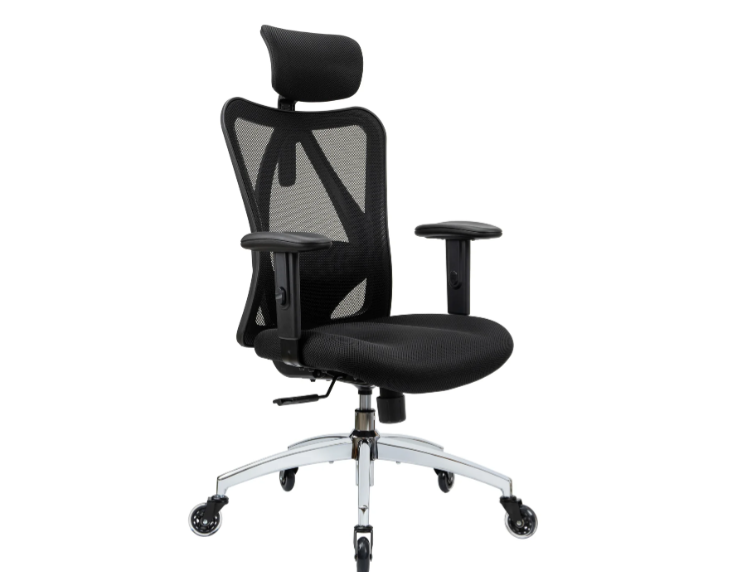
The Duramont offers both height and depth lumbar adjustment, making it easier to align the support for longer torsos properly.
Pros
• Lumbar height and depth adjustment
• Adjustable seat depth
• Wide seat base
• Adjustable headrest
• Strong recline tension system
Cons
• Larger footprint
• Requires adjustment time to dial in fit
Why It Works for Tall Users
The adjustable seat depth allows longer legs to remain supported without sacrificing lumbar contact. Lumbar depth control ensures the lower spine remains aligned even during recline.
Fit Notes for 6’2”–6’5” Users
Most users in this range will benefit from fully extending seat depth and raising lumbar support slightly higher than expected. The headrest should align with the mid-neck area rather than the base of the skull.
Best Premium Option: Steelcase Series 1
Best For: Tall professionals sitting 8–10 hours daily who prioritize long-term durability.
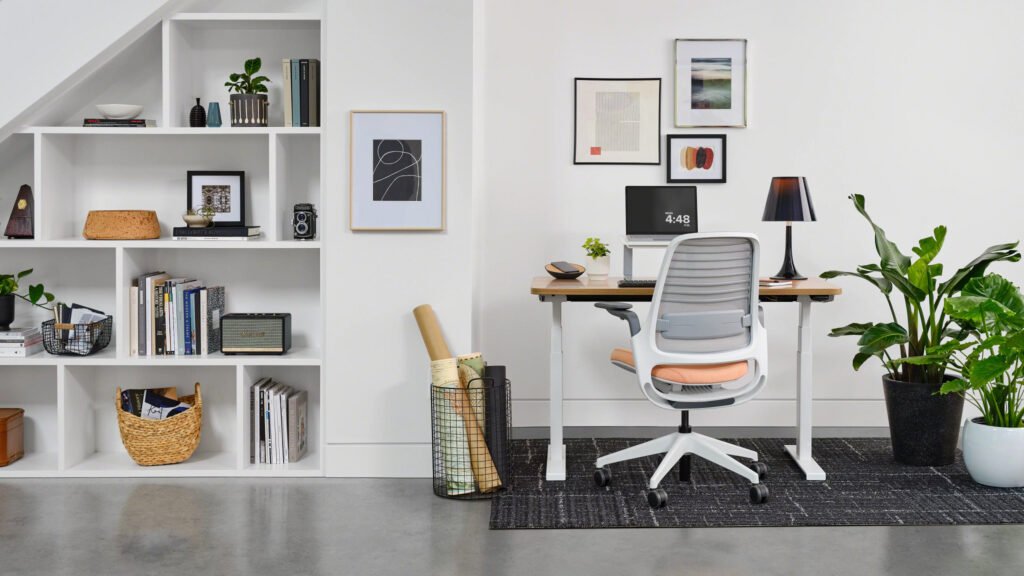
The Steelcase Series 1 offers adjustable seat depth and structured back support suited for taller builds when properly configured.
Pros
• Adjustable seat depth
• Contoured back support
• Smooth recline mechanism
• Strong build quality
Cons
• Higher cost
• Headrest may be optional depending on configuration
Why It Works for Tall Users
Seat depth adjustment maintains thigh support, while the structured backrest maintains alignment even during slight recline.
Fit Notes for 6’2”–6’5” Users
Taller users should fully extend the seat depth. For those above 6’4”, the headrest version may provide additional upper spine comfort.
Best Mid-Range Stability: SIHOO M57
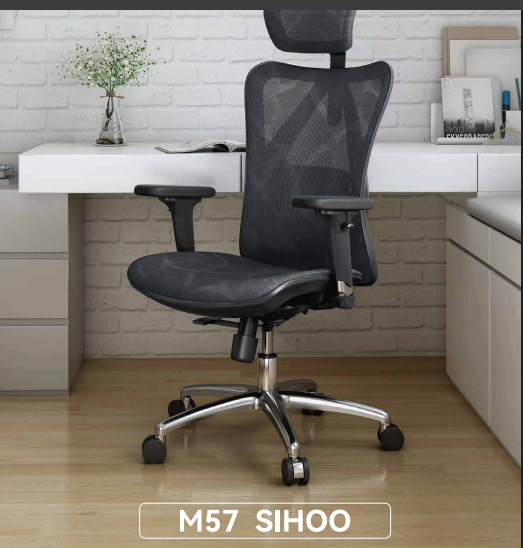
Best For: Taller users seeking stability and lumbar height adjustability at a moderate price.
Pros
• Adjustable lumbar height
• Breathable mesh back
• Stable recline
• Good weight capacity
Cons
• Moderate seat depth range
• Headrest adjustability may feel limited for very tall builds
Why It Works for Tall Users
The mesh back provides airflow during long sessions, and lumbar height adjustment allows improved positioning for taller spines.
Fit Notes for 6’2”–6’5” Users
This model works best for users closer to 6’2”–6’4”. Taller people may prefer deeper seat extensions.
Best Budget-Friendly Option: Nouhaus Ergo3D
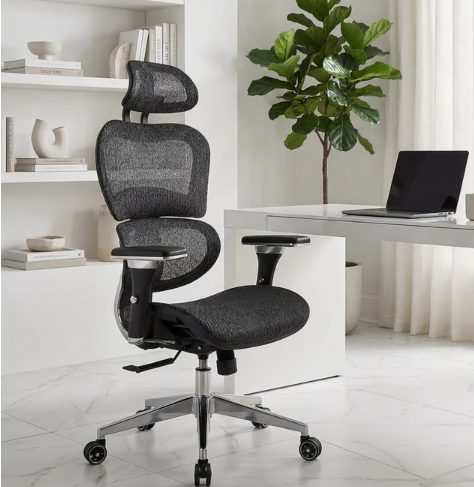
Best For: Taller users seeking affordability with reasonable adjustability.
Pros
• Adjustable headrest
• Reasonable seat depth
• Lower price tier
Cons
• Cushion durability is moderate
• Not ideal for heavier builds
Why It Works for Tall Users
The headrest and adjustable back provide moderate-tall accommodation without premium pricing.
Fit Notes for 6’2”–6’5” Users
Suitable for moderately tall builds. Users above 6’4” should confirm seat depth is sufficient for full thigh support.
How to Adjust Your Chair If You Are 6’2” or Taller
Proper adjustment is just as necessary as product selection.
Tall users should:
• Raise seat height until hips are level with or slightly above knees
• Extend seat depth fully while maintaining knee clearance
• Raise lumbar support higher than average settings
• Use a slight recline (100–110 degrees) to reduce spinal compression
For posture alignment guidance, see our article on how to sit properly for 8+ hours without back pain.
Common Mistakes Tall Users Should Avoid
• Choosing chairs without seat depth adjustment
• Ignoring lumbar height range
• Selecting short backrest models
• Locking recline upright for long sessions
• Prioritizing brand over fit
Fit always matters more than marketing claims.
FAQ
What seat height is best for someone 6’2”?
Most users 6’2” or taller require a seat height range between approximately 18–22 inches to maintain proper knee alignment and foot positioning.
Do tall people need a headrest?
A properly positioned headrest can reduce neck strain, but it must align with the natural curve of the neck rather than pushing the head forward.
Is mesh or cushion better for tall users?
Mesh improves airflow during long sessions, while thicker cushions may provide better thigh support for heavier builds. The best option depends on body composition and daily sitting duration.
Tall Users and Spinal Alignment: Why Fit Matters More Than Brand
For taller individuals, improper chair proportions can gradually create alignment issues that may not be immediately noticeable.
When the seat depth is too short:
• The thighs remain partially unsupported
• Body weight shifts forward
• Lumbar contact decreases
• Core muscles fatigue more quickly
When backrests are too short:
• The upper spine rounds
• Shoulder blades lack support
• Neck strain increases
A chair that fits an average-height user comfortably may feel subtly misaligned for someone 6’3” or 6’4”. That misalignment compounds over long work sessions.
For tall users, ergonomic comfort depends less on brand recognition and more on alignment with proportions.
Seat Depth vs. Back Height: Which Matters More for Tall Users?
Both are important, but seat depth is typically the first limiting factor.
Seat depth supports the femur length. Without adequate thigh support, the pelvis shifts and lumbar alignment weakens.
Back height determines whether the upper spine remains supported during long sessions.
Ideally, tall users should prioritize:
- Adjustable seat depth
- Adequate lumbar height range
- High backrest support
Headrest positioning becomes secondary but is still essential for neck alignment.
Comparison Table: Tall-Friendly Ergonomic Chairs
| Chair | Adjustable Seat Depth | Lumbar Height Adjustment | Headrest | Best For |
| Duramont | Yes | Yes | Yes | Tall users 6’2”–6’5” |
| Steelcase 1 | Yes | Structured | Optional | Premium tall professionals |
| SOHOO M57 | Moderate | Yes | Yes | Mid-range tall builds |
| Nouhaus Ergo3D | Moderate | Limited | Yes | Budget tall users |
When a Chair May Not Be Tall-Friendly
Even chairs marketed as ergonomic may not suit taller builds if they:
• Lack adjustable seat depth
• Have fixed lumbar positioning
• Offer low backrest height
• Have narrow seat bases
Before purchasing, always review the seat depth measurement and adjustment range.
Should Very Tall Users (6’5”+) Consider Big and Tall Chairs?
Users significantly above 6’5” may benefit from chairs explicitly designed for big-and-tall categories.
These models typically provide:
• Higher weight capacity
• Wider seat base
• Deeper seat depth
• Stronger frame construction
However, not all big-and-tall chairs offer refined ergonomic adjustability, so balance structural size with lumbar control.
How This Guide Relates to Lower Back Pain
Taller users are more likely to experience lumbar strain when chair dimensions are misaligned.
If lower back discomfort is already present, consider reviewing our detailed guide on the best ergonomic chairs for lower back pain for additional lumbar-focused analysis.
Final Verdict
If you want the most flexible fit for tall proportions, the Duramont offers the strongest balance of seat depth, lumbar adjustability, and structural stability.
For long-term professional use and refined ergonomics, Steelcase Series 1 is a durable premium option.
Mid-range and budget options like SIHOO M57 and Nouhaus Ergo3D can accommodate moderately tall builds, though very tall users may prefer a deeper seat extension.